No. 1The Logic of Tiny Upgrades
There is a category of small domestic decision that costs almost nothing and yet changes the entire feel of a day. Not a renovation, not a splurge, not a project requiring a mood board. Just: the good glasses tonight. The cloth napkins, folded square. The bed made before 8am even though nobody is coming over and nobody will care. These things don't photograph particularly well and they won't trend on any platform. They work anyway.
We have a tendency to save things. The good china for guests who materialise twice a year. The expensive candle for when the moment is right. The nice tablecloth for an occasion that keeps not arriving. Meanwhile, Tuesday happens — long and ordinary and entirely capable of being slightly better than it is. This is the argument for using the good stuff on a regular Thursday: you actually live on Thursdays.
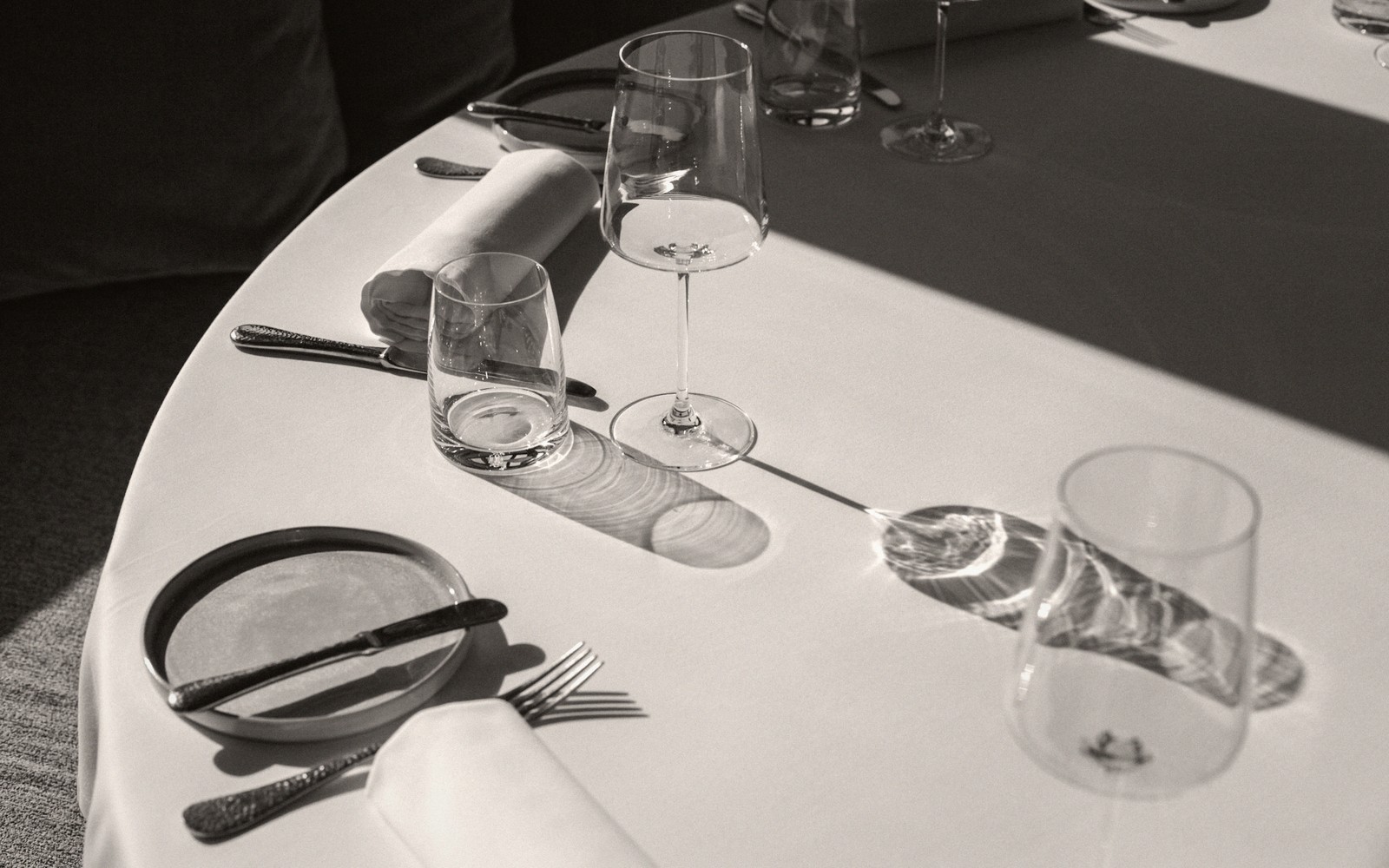
Cloth napkins are the gateway. They cost very little — a set of plain linen ones, unironed, stacked in a drawer — and they do more work than the paper ones ever did. They're warmer in the hand. They feel considered, even when zero consideration went into the evening. There is something about setting a cloth napkin at a place that says this meal matters, regardless of whether the meal is leftover soup. The signal is real even when the occasion is not.
They cost very little — a set of plain linen ones, unironed, stacked in a drawer — and they do more work than the paper ones ever did.
No. 2What the Made Bed Actually Does
The made bed is not about tidiness, or not only. It is about the moment you walk back into the room at night and the room looks like someone with standards lives there. That moment costs forty-five seconds in the morning. The return on forty-five seconds is, by any measure, absurd.
The good glasses work the same way. You know the ones — the stems you bought thinking they were for dinner parties, now living at the back of the shelf behind the everyday tumblers. Pour a weeknight glass of wine into them and something shifts, not in the wine but in the drinking of it. The small ceremony of the nice glass tells your nervous system that the evening has arrived, that the day is done, that you are no longer on the clock. A plastic tumbler conveys the opposite message. Both are containers. Only one works as punctuation.
There is a version of this logic that tips into precious — the person who lights the candle and then won't let anyone sit down. That's not the goal. The goal is the opposite: treating the ordinary Tuesday as sufficient occasion for the things you actually like. The candle lit because it smells good and the evening is yours. The good towels out because you shower every day and your shoulders ache and you deserve a good towel on a Monday. These are not indulgences. They are just sensible.
No. 3Ordinary Occasions Are Still Occasions
The ritual matters more than the object. A favourite mug used every single morning is a small anchor in a day that might otherwise unspool before noon. A made bed is a decision made, which is why it works as a psychological trick: you have already done one thing correctly. The cloth napkin is a folded square that says the meal you are about to eat is worth sitting down for, even if you are eating alone, especially if you are eating alone.
None of this requires money or a particular kind of home or a lengthy Saturday overhaul. It requires using what you already own, more deliberately, on regular days. The beautiful things you bought or were given or carried home from a market are not waiting for their moment. Tuesday is the moment. Wednesday is the moment. The evening you get in late and tired and there is nothing remarkable on the menu — that evening wants the good glasses more than any dinner party ever did.
Put out the cloth napkins. Light the one you've been saving. Make the bed.