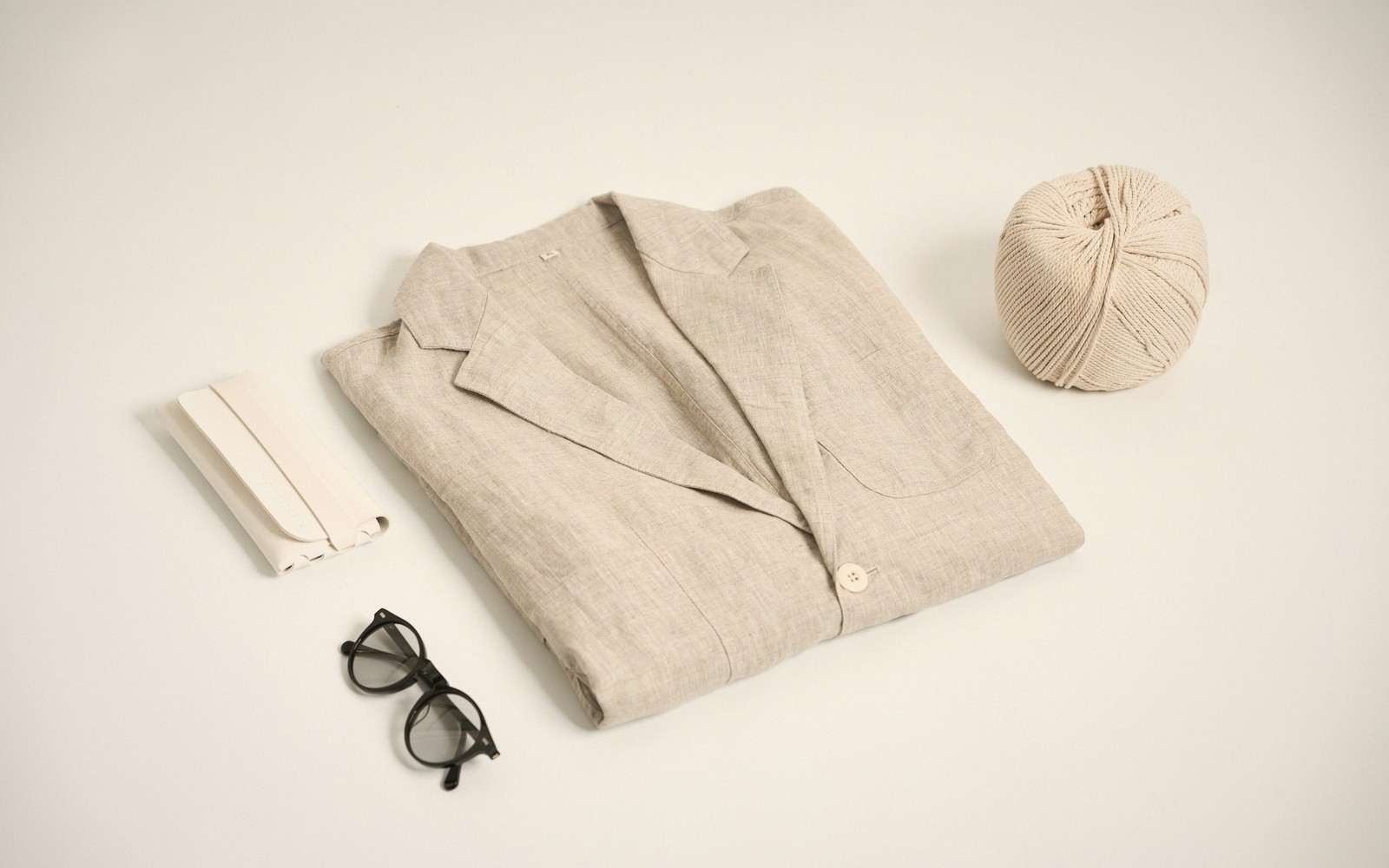
No. 1The comfort myth has been misread
Somewhere along the way, "dress for your age" became code for "disappear quietly." Muted palette, covered arms, nothing too interesting — the subtext being that a woman past a certain point should stop taking up visual space. That advice has never held up, and most of us have quietly stopped listening to it anyway. But the real conversation about dressing well as you get older isn't about defying age or camouflaging it. It's about making choices that work with the body and life you actually have, not the one fashion copy was written for.
Let's start with what "dress comfortably" actually means, because it's been mangled into something passive. Comfort isn't a consolation prize. It's a criterion — arguably the most intelligent one. When you stop tolerating things that hurt or pinch or require constant adjustment, something shifts. You stand differently. You stop looking distracted. The clothes that earn their place in the wardrobe are the ones you forget you're wearing, and that confidence is visible from across the room. It reads as ease, and ease, as it turns out, reads as chic. That's not a coincidence. It's why the women who always look good tend to be wearing something structurally sound rather than maximally fashionable.
Comfort isn't a consolation prize. It's a criterion — arguably the most intelligent one.
Comfort also doesn't mean shapeless. A well-cut trouser in a fabric with some weight to it is more flattering than most things sold as "slimming." A blazer that fits through the shoulders does more in five minutes than an hour of second-guessing. The silhouette you're after isn't smaller — it's deliberate. Those are very different things, and the distinction becomes clearer every year.
No. 2The colour question, genuinely answered
Women are handed contradictory advice about colour for decades and it mostly cancels itself out. Don't wear white, it emphasises. Don't wear black, it's ageing. Wear neutrals, they're safe. The reality is simpler and kinder: the colours that work are the ones that work with your actual skin tone, and that changes over time — but not in the direction most advice implies.
As skin lightens and hair shifts, a lot of women find that the very dark, very saturated colours that worked brilliantly in their thirties start to overwhelm. Equally, stark cool white close to the face can flatten. What tends to perform consistently well as you move through your forties, fifties, and beyond: off-white, warm ivory, camel, soft rust, dusty rose, olive — tones with some warmth and depth that borrow from rather than compete with your colouring. Rich jewel tones4 — burgundy, forest green, deep teal — earn their place too. They're grown-up without being funereal, and they have an authority that trend-chasing brights rarely deliver season to season.
Black remains the perennial sensible option, but it works better a layer away from the face than pressed directly against it, unless your colouring carries it easily. A black jacket over a warm-toned blouse, rather than a black turtleneck as the whole statement, is the edit worth making. The case against beige makes the companion argument: neutrals are a supporting cast, not a personality. The goal is a wardrobe with some genuine conviction in it.
A black jacket over a warm-toned blouse beats a black turtleneck — keep the darkest layer off the face.
No. 3What actually reads as put-together
Shoulders are genuinely underestimated. A neckline that shows the collarbone and shoulder — a wide boat neck1, an off-shoulder cut, a slightly dropped shoulder — is elegant on almost everyone, at any age, for a reason that has nothing to do with size: it extends the horizontal line and lifts the eye. It's not about showing skin because skin must be shown; it's about proportion and where attention lands. Jewellery does a similar job. One interesting piece — a sculptural earring, a textured cuff, a long pendant — draws the eye to where you want it and gives an otherwise simple outfit somewhere to land.
Shoes deserve more honest consideration than they usually get. The argument for heels has always been partly posture and partly elongation — both legitimate. But the trade-off in pain, instability, and the long-term toll on joints is real and cumulative. The good news is that the footwear category has done fifteen years of genuine design work since the only options were a stiletto or a sensible flat. A block-heeled boot, a well-constructed loafer, a pointed-toe kitten heel3 — these deliver the line and the intention of a heel without the structural cost. Comfort and style stopped being opposites around the time the fashion industry stopped pretending otherwise.
| The stiletto | The block heel2 & kitten heel | |
|---|---|---|
| The line | Elongates, classically | Delivers the same intention |
| Stability | A negotiation with every kerb | Built in |
| The long-term toll | Real and cumulative | Negligible |
| Verdict | Occasional ceremony | The working wardrobe |
The last thing worth saying: sunglasses are doing far more work than they get credit for. A great pair frames the face, draws attention upward, and finishes a look the way a good handbag does — with intention. They're not a disguise for anything. They're an accessory in the oldest, truest sense: something that completes the picture you're already making.
None of this is about looking younger. That's a losing game with a moving target, and it tends to produce choices that read as effortful rather than polished. What you're after is looking exactly like yourself — just very deliberately so. The women who pull that off aren't hiding anything. They've just stopped editing out the interesting parts.
- boat neck — wide neckline crossing the collarbone, roughly shoulder to shoulder
- block heel — wide, square heel offering stability without sacrificing height
- kitten heel — short, slim heel of 1.5–2 inches, mid-century in origin
- jewel tones — deep, saturated colours named for gemstones: ruby, emerald, sapphire